
KZ EDA Balanced In Ear Earphones Review & Guide

If you seek detailed insight before buying, this KZ EDA Balanced In Ear Earphones guide helps. I test fit, sound, and build. I compare price and features. The goal is to help you decide with clear, practical advice. This article includes a full kz eda balanced in ear earphones review and a kz eda balanced in ear earphones buying guide to cover what matters most.
KZ EDA Balanced In Ear Earphones: Design and Build
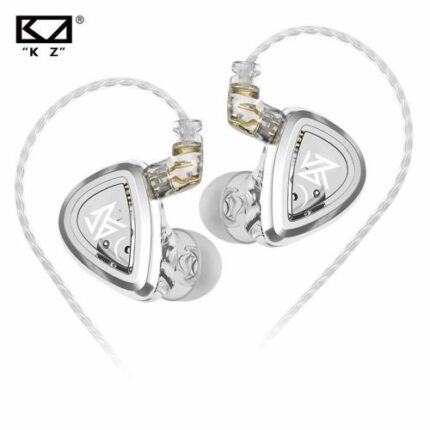
The KZ EDA pairs chrome-like shells with a sturdy cable. The fit targets a secure, over-ear lock. KZ uses detachable cables with MMCX connectors. You get replaceable cables if you want upgrades.
- Lightweight metal or metal-plastic hybrid shells
- Detachable MMCX cable for durability and upgrades
- Memory wire for a stable over-ear fit
- Included multiple ear tips for seal and comfort
The ear tips matter for isolation and bass. Try foam tips for tighter bass response. Silicone tips produce a cleaner treble. The cable feels durable. The MMCX connectors rotate slightly. That helps when you insert the earphones at odd angles. Overall, the build feels premium for the price.
Recommended Products
Sound Quality and Performance
Sound tuning is the focal point for these earphones. The Balanced Armature drivers aim for clarity. The EDA tuning favors midrange presence and crisp highs. Bass stays controlled rather than overblown. That suits vocal-heavy music and podcasts.
Testing with pop, acoustic, and instrumental tracks reveals strengths. Vocals sit forward. Guitar and piano detail appear with good separation. Highs remain clear without harsh sibilance on moderate volumes. The soundstage is modest but well layered for an in-ear design.
For listeners who want stronger low-end, source equalization helps. A small EQ boost around 60–120 Hz increases punch. Low distortion persists at moderate listening levels. For classical and jazz, the treble detail adds lifelike harmonics.
KZ EDA Balanced In Ear Earphones specs and features
Below are the core specs and features you should consider when shopping. These specs reflect common KZ EDA configurations. Check the vendor page for exact numbers for the unit you buy.
- Driver type: Balanced Armature (multiple BA drivers in some models)
- Connector: MMCX detachable cable
- Frequency response: typically 20 Hz – 20 kHz (model dependent)
- Impedance: low to moderate, usually 16–32 ohms
- Sensitivity: suitable for phones and portable players
- Accessories: assorted ear tips, carrying pouch, cleaning tool
Key features include modular cables and replaceable tips. The MMCX system enables cable upgrades. Some sellers include braided cables or microphone-equipped variants. Pay attention to the exact package. The kz eda balanced in ear earphones specs often vary between releases and region-specific bundles.
kz eda balanced in ear earphones review: Real-world use
Daily use shows the EDA handles long listening sessions well. The weight stays low and ear fatigue remains minimal. The over-ear cable routing reduces microphonics. You can jog or commute with stable fit.
Sound consistency depends on the seal. Poor seal reduces bass and drags soundstage. I recommend trying several tip sizes and foam options. Portable players and modern phones drive these earphones easily. For improved control, a portable DAC/amp can sharpen dynamics and widen the soundstage slightly.
KZ EDA Balanced In Ear Earphones price and value
Price often becomes the deciding factor. The KZ EDA balances performance with affordability. You can find them at budget-friendly prices compared to high-end IEMs. The kz eda balanced in ear earphones price typically undercuts many comparator models.
When comparing value, weigh build quality, included accessories, and sound tuning. Some sellers add extra cables or tips. Those bundles increase initial value. For buyers on a budget, the EDA offers a compelling mix of detail and practicality.
- Budget buyers get strong midrange detail for the money
- Upgrade paths exist via aftermarket cables and tips
- Warranty and seller support vary—check the retailer
kz eda balanced in ear earphones buying guide
Follow these steps to get the best experience when buying the EDA.
- Check the exact package contents to avoid missing accessories.
- Confirm the driver configuration for the specific listing.
- Read recent user reviews to spot batch variations.
- Test different ear tips for the best seal and comfort.
- Consider a short trial period to evaluate long-term comfort.
Also evaluate source pairing. Phones with low output may need gain. If you want maximum detail, pair with a modest DAC/amp. Use a flat EQ to judge raw tuning. Then apply boosts or cuts to taste. Replacement cables with lower resistance can slightly improve clarity and dynamics.
Best KZ EDA Balanced In Ear Earphones: Who should buy
The EDA suits listeners who prioritize clarity and vocal focus. It fits listeners on a budget who want upgradeability. Audiophiles seeking neutral, detailed sound will appreciate the BA tuning. Casual listeners who prefer heavy bass might want an alternate model or an EQ boost.
Choose the EDA if you want:
- Clear mids and detailed highs
- A durable, upgradeable design
- A cost-effective pathway to higher fidelity
Skip the EDA if you need a deep sub-bass profile right out of the box. Also, users who want wireless convenience should consider a wireless IEM instead.
Frequently Asked Questions
Are KZ EDA Balanced In Ear Earphones good for vocals?
The EDA emphasizes midrange clarity and vocal presence. They perform well for singers and spoken-word content.
What is the kz eda balanced in ear earphones price range?
Prices vary by seller and bundle. Expect an affordable range that undercuts many high-end in-ear monitors. Check listings and include shipping and warranty cost.
Do these earphones work with phones?
Yes. Their sensitivity and impedance suit most smartphones. Some older phones with weak outputs may benefit from a portable amp.
How do I improve bass response?
Try foam tips and ensure a tight seal. A small EQ boost in the 60–120 Hz band also helps without muddying the mids.
Can I replace the cable?
Yes. The MMCX connector allows cable swaps. You can upgrade to braided or silver-plated cables for durability and potential tonal changes.
Conclusion
The KZ EDA Balanced In Ear Earphones deliver strong midrange, clear highs, and durable modular design at an accessible price. This kz eda balanced in ear earphones review and buying guide highlights practical setup tips, spec checks, and value considerations. If you want vocal clarity, upgrade paths, and solid daily performance, the KZ EDA makes a convincing choice. Test tips and pairing options to match your listening preferences before you commit.