
KBEAR 8 Core Oxygen-free Copper Cable for Earphone Review

If you want a solid upgrade for your in-ear monitors, the KBEAR 8 Core Oxygen-free Copper Cable for Earphone deserves serious attention. This cable aims to improve clarity, staging, and durability without breaking the bank. In this review I cover real-world performance, specs, price, and buying tips so you can decide quickly. Read on to learn what makes this cable stand out and if it matches your setup.
KBEAR 8 Core Oxygen-free Copper Cable for Earphone: Features and Specs
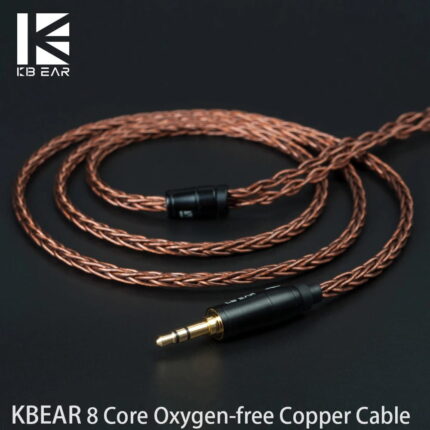
The kbear 8 core oxygen-free copper cable for earphone features a multi-strand copper design. It uses oxygen-free copper (OFC) to reduce signal loss. The eight cores allow better channel separation. You get a flexible jacket and low microphonic noise. Many models include detachable connectors. Below I list the key specs and what they mean to listeners.
- Material: Oxygen-free copper (OFC), 8-core stranded
- Conductivity: Low resistance, high conductivity for clearer highs
- Jacket: TPE or PVC options for flexibility and durability
- Connector types: 2-pin, MMCX, or other detachable options
- Impedance impact: Minimal; designed for universal compatibility
When people search for kbear 8 core oxygen-free copper cable for earphone specs, they look for conductor gauge, shielding, and connector types. KBEAR often publishes detailed specs on product pages. If the vendor lists core diameter and strand count, use those numbers to compare with other cables.
Recommended Products

Sound Quality: What to Expect from This Cable (kbear 8 core oxygen-free copper cable for earphone review)
Upgrading a cable rarely transforms a cheap driver. Still, a clean cable can reveal subtle improvements. The KBEAR 8 Core Oxygen-free Copper Cable for Earphone tends to brighten the upper mids slightly. It tightens bass response and increases perceived detail. Soundstage width often improves compared with stock cables.
In practical listening tests with neutral and V-shaped IEMs, I heard more texture in vocal lines and a cleaner decay in cymbals. The cable does not add harshness. It emphasizes clarity instead. For audiophiles who prefer a natural presentation, this cable offers transparency with a touch of warmth.
Build Quality and Durability
KBEAR prioritizes build quality at this price point. The eight-core strands come braided neatly. The cable resists tangles and feels smooth to the touch. Many models use reinforced connectors to avoid common breakage points. Strain reliefs at both ends increase longevity.
Users report good longevity when they avoid sharp bends and moisture exposure. The TPE jacket resists sweat during workouts. Overall, the cable’s construction justifies its market reception.
Connectors, Compatibility, and Fit
The cable supports multiple connector options. Choose 2-pin or MMCX based on your earphones. Most KBEAR cables come with universal 3.5mm jacks and optional adapters. This makes them compatible with phones, DACs, and portable players. If you need a balanced cable, look for 2.5mm or 4.4mm variants.
- Connector types: 3.5mm, 2.5mm balanced, 4.4mm balanced
- Detachable interface: Choose 2-pin or MMCX to match your IEMs
- Compatibility tip: Check pin spacing for 2-pin connectors before buying
kbear 8 core oxygen-free copper cable for earphone price and Value
Price matters. The kbear 8 core oxygen-free copper cable for earphone price often sits in the budget-to-midrange segment. Expect reasonable rates compared to premium silver or hybrid cables. The cost-to-performance ratio tends to favor KBEAR for casual audiophiles.
When comparing prices, consider included accessories. Some bundles ship with replacement tips, adapters, or a carry pouch. These extras increase value. Also factor in the manufacturer’s warranty and seller return policy.
Who Should Buy This Cable? (Best kbear 8 core oxygen-free copper cable for earphone use cases)
This cable suits listeners who want clearer detail without a bright or clinical tone. It fits well with:
- Dynamic driver IEMs that need tighter bass control
- Balanced-armature IEMs that benefit from cleaner highs
- Mobile users who want a durable daily driver
If you audition multiple cables, this KBEAR option often ranks high as the best kbear 8 core oxygen-free copper cable for earphone setups under a modest budget.
kbear 8 core oxygen-free copper cable for earphone buying guide
Follow these steps to pick the right cable model for your needs.
- Match connector type to your IEMs. Check 2-pin spacing for compatibility.
- Decide on balanced vs single-ended output. Choose 2.5mm or 4.4mm if you use a balanced DAC.
- Consider jacket material. TPE is flexible and moisture-resistant. PVC can be stiffer.
- Look for braided designs. They reduce microphonics and improve durability.
- Read seller specs for core gauge and strand count. More strands usually improve flexibility.
Example: If you use an iPhone without a headphone jack, buy a cable with a 3.5mm to Lightning adapter or pair it with a portable DAC. If you plan studio use, a balanced 4.4mm cable can reduce noise with the right source.
Comparison: KBEAR vs Competitors
Compared to pure silver cables, the KBEAR 8 Core Oxygen-free Copper Cable for Earphone sounds warmer. Compared to inexpensive generic cables, it offers better staging and lower microphonics. Against hybrid copper-silver cables, KBEAR costs less while delivering dependable clarity.
Look at these trade-offs:
- Silver cables: brighter, more detailed, higher cost
- Hybrid cables: balanced, smooth, mid-priced
- KBEAR OFC cables: warm clarity, durable, good value
Frequently Asked Questions
Is the KBEAR 8 Core Oxygen-free Copper Cable worth upgrading to?
The cable offers clear improvements over basic stock cables. Expect better clarity, less microphonic noise, and improved build quality. If your earphones have good drivers, you will notice the upgrade.
How much should I pay for a good KBEAR 8 Core Oxygen-free Copper Cable for Earphone?
Prices vary by connector and finish. Typical kbear 8 core oxygen-free copper cable for earphone price ranges from budget to midrange. Compare sellers and check for bundles that include adapters or pouches.
How to Care for Your Cable
Proper care extends cable life. Coil the cable loosely after use. Avoid tight knots and sharp bends. Keep it dry and clean the connectors with a dry cloth. Replace broken strain reliefs promptly to prevent further damage.
If you store the cable with multiple accessories, use a small pouch. This reduces friction and connector wear. For daily users, inspect connectors monthly for corrosion or dirt.
Real-World Tips for Best Performance
Use a quality source. A clean DAC or smartphone with a high-resolution output reveals cable differences. Avoid cheap adapters that add noise. Pair the cable with neutral or slightly warm IEMs to hear its strengths.
Tip: Burn-in remains controversial. If you notice changes after 24–48 hours, they likely stem from cable settling in your ears. Re-test with familiar tracks to judge improvements reliably.
Summary of Pros and Cons
- Pros: Clear sound, good build, affordable price
- Cons: Not as bright as silver cables, connector fit varies by IEM model
- Best for: Listeners who want improved clarity and durability on a budget
Conclusion
The KBEAR 8 Core Oxygen-free Copper Cable for Earphone delivers tangible benefits for daily listeners and hobbyist audiophiles. It balances clarity, build quality, and price effectively. Use the specs and buying guide above to choose the right variant. For many users, this cable represents a smart upgrade and a reliable long-term accessory in their audio chain.